To prep or not to prep
How our Copenhagen/Malmö trip went
Short updates:
For the second year in a row, Chicago has gotten some very smoky air coming from wildfires in Canada. The worst day so far was July 16, when I was hoping to see Marcos Valle and Daniel Villarreal play at Millennium Park. We were planning on staying home, and the concert itself was cancelled with the air quality index above 400.
When there is no smoke, it’s been a great summer. We went to the pool last weekend and the beach this weekend, and both kids are getting more comfortable with water.
I read some provocative ideas about the nature of mathematics, from the mathematician David Bessis: an approachable interview and his own article, “We’ve been wrong about math for 2300 years”.
My post last month was how I prepared for our trip to Denmark and Sweden by reading a bunch of books, listening to music, and watching a movie.

Now, let me tell you how the prep paid off—sometimes as I expected, but often by surprise.
When the prep was spot on
Temperatures were much higher than normal, and when we got to Malmö, I opened Murder at the Savoy, a crime novel set in the city. Here’s the first sentence:
The day was hot and stifling, without a breath of air.
The hot weather turns out to be a running gag in the book, as characters struggle to keep themselves cool without AC. Thankfully for us, it got cooler in reality after the first couple of days.
The first page also has this:
Malmö is closer to Rome than to the midnight sun
This is not literally true. Sunsets were around 10pm, and Copenhagen’s Tivoli Gardens would have fireworks at 11:30pm, when the skies weren’t completely dark1.
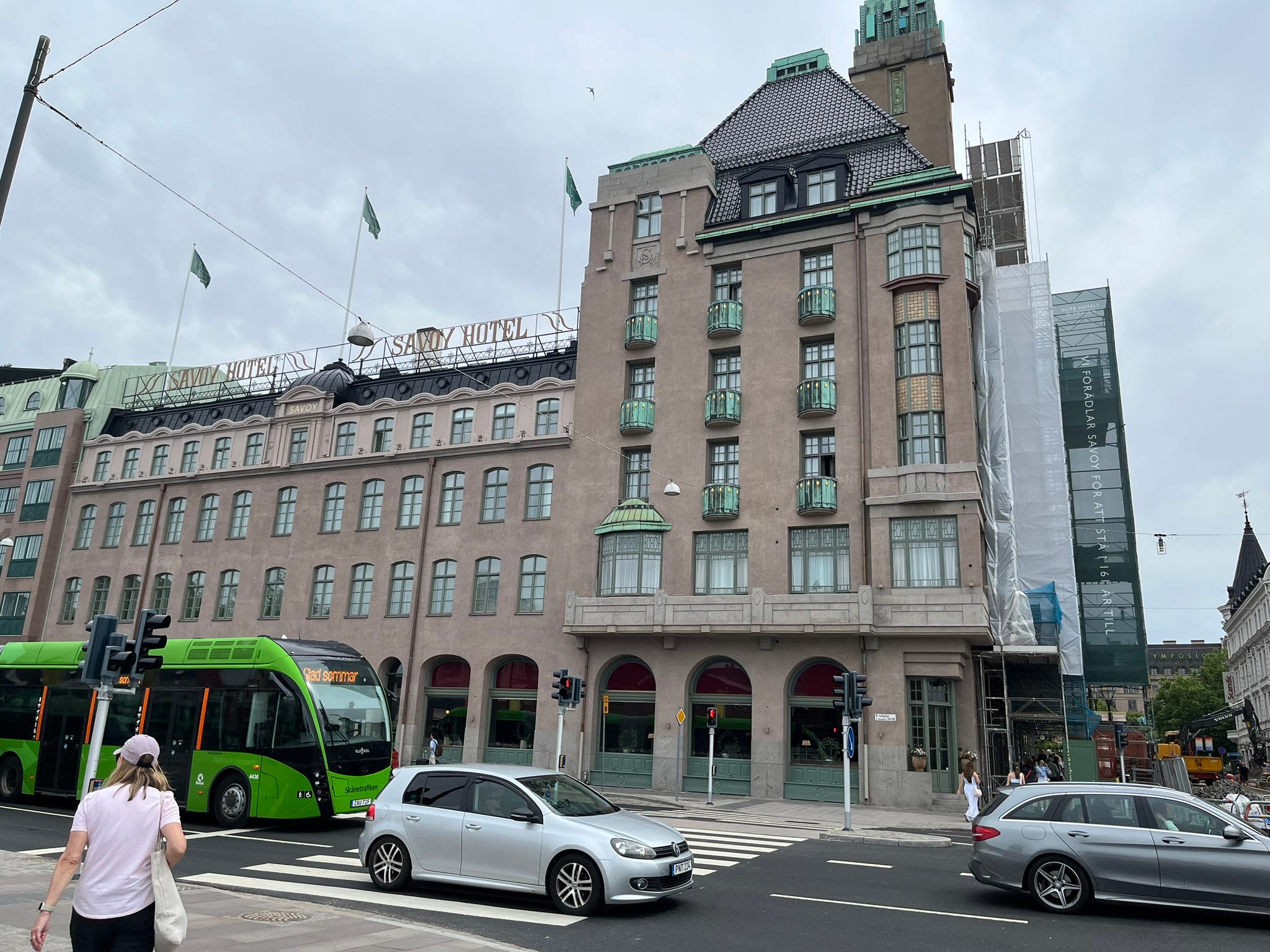
The main detective comes in from Stockholm to solve a murder at the Savoy hotel in downtown Malmö, and instead of his usual St. Jörgen hotel—where we happened to be staying!—he stays at the Savoy. Many of the locations described in the book are places you can actually go and see, even though the book is from 1970.
So I highly recommend reading crime fiction for trips. Crime authors put in a lot of scenic, architectural, and just factual information that is relevant to the setting.
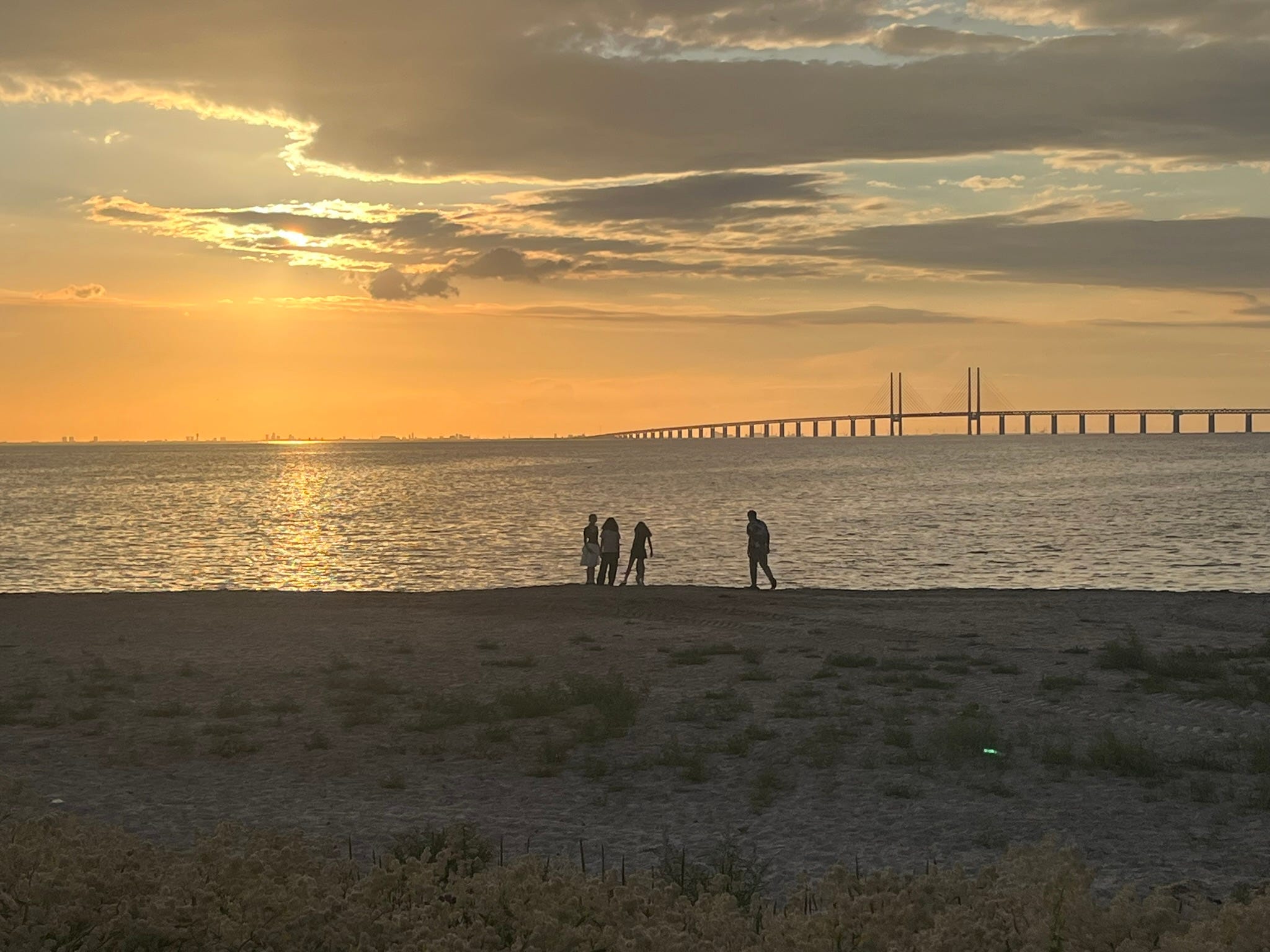
Malmö and Copenhagen are now connected by the Øresund Bridge, which opened in 2000. We flew into Copenhagen, took the train on the bridge to Malmö, and took the train back to Copenhagen.
One really fun thing I discovered from the book: there used to be hydrofoil service between the two cities. Hydrofoils are boats that lift up so it’s mostly floating above the water, making them faster and more fuel-efficient. The book even describes Malmö housewives going to Copenhagen during the day to shop—this must be easier now, but it didn’t start with the bridge.
The Danish movie Julie and I watched, Another Round, gave us an unexpected insight into something we kept seeing in Copenhagen. It’s a movie where the main characters are high school teachers, and we see how Danish high schoolers celebrate graduation: they wear white sailor caps, ride in the back of a big truck, and party with a huge amount of alcohol.
By coincidence, it was graduation season when we went to Copenhagen. So the first day we were there, we saw one such truck carrying a bunch of young people. From the hotel window, we saw a different group of graduates, some of whom carrying a Danish flag. We stopped seeing the big celebrations when we went back to Copenhagen after 5 days in Malmö, but we would still see small groups or even individual young people, wearing the white caps, out and about in Copenhagen.
Interlude: food
As you might expect, we did have some good food2.
Our friends’ favorite cafe in downtown Malmö, Lilla Kafferosteriet3, was excellent. We kept going back, especially for their cardamom and cinnamon buns.
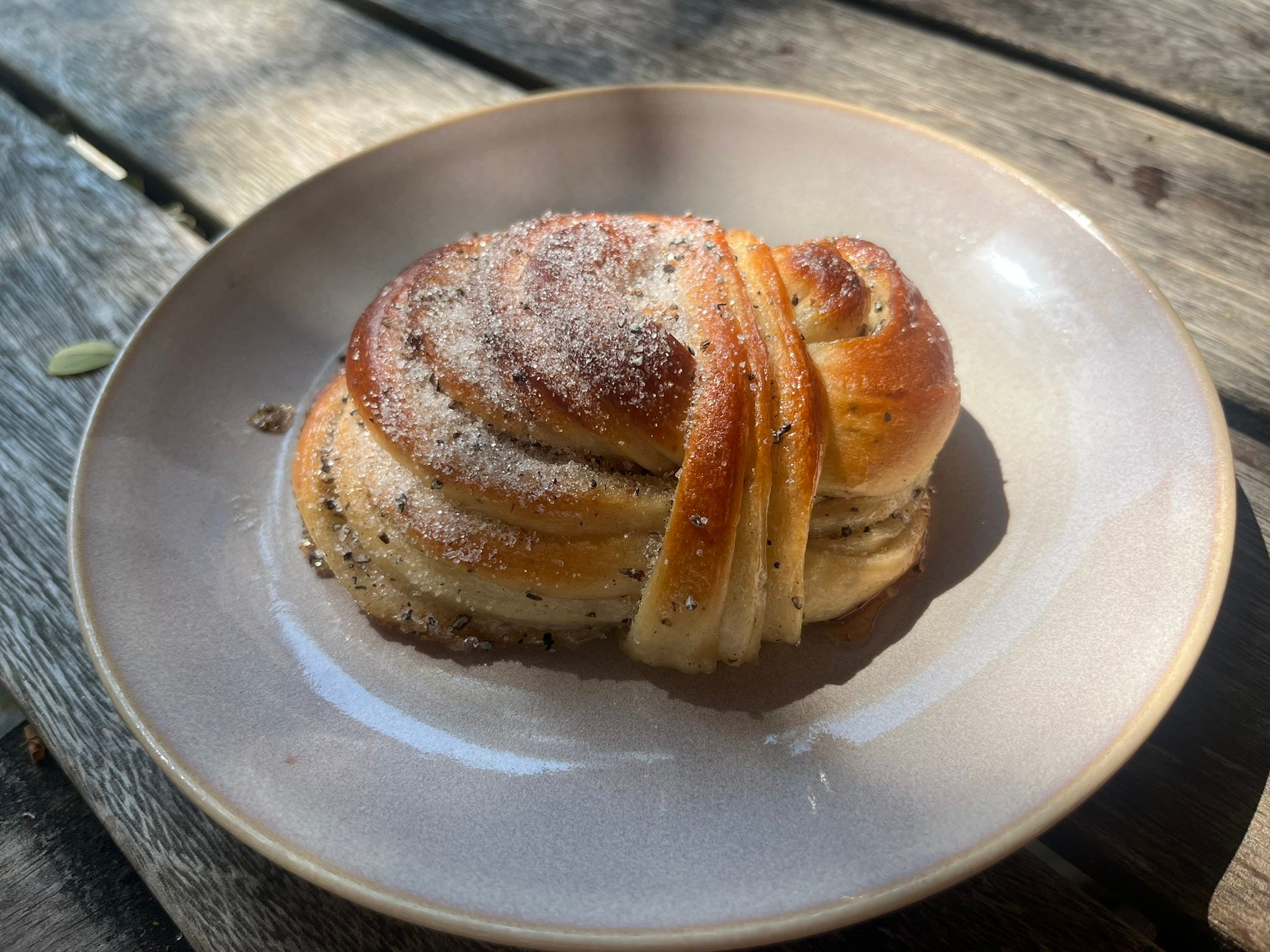
This coffeeshop is also where my music prep was relevant, as I heard Timbuktu’s “Generellt” come out of the speakers.
On the Danish side, we enjoyed the pastries at Hart, especially the cardamom croissant. Their tebirkes were also great.

We can get cardamom buns at some bakeries in Chicago, but they are somehow just not quite there—either the amount of the cardamom isn’t right, or the bread doesn’t have the right flavor. I do need to try the cardamom buns at Lost Larson, and we got intel that the cafe at the Swedish American Museum4 has a very good version.
The other food item that we kept getting was the open-faced sandwiches—smørrebrød in Danish, smörrebröd in Swedish. Malmö has a park surrounding its medieval castle, and we had a lovely lunch of smörrebröd at the outdoor cafe inside this park.
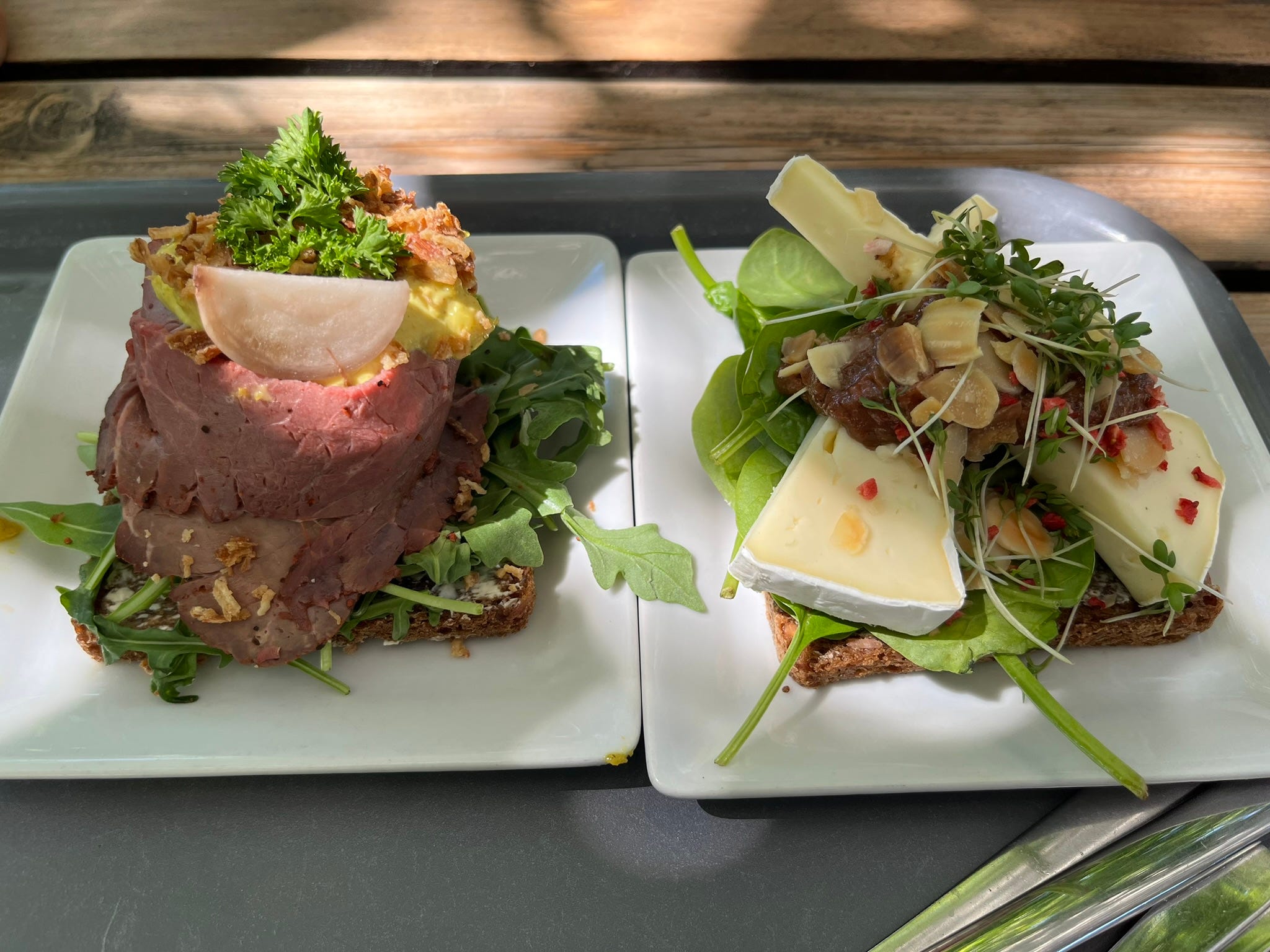
This is everyday food, and also something that can be elevated by great ingredients. One book that I got for myself was a Danish book exclusively about open-faced sandwiches. There is actually an English translation of this book, but the Danish book is a better souvenir5. (The author, Trine Hahnemann, writes on Substack.)
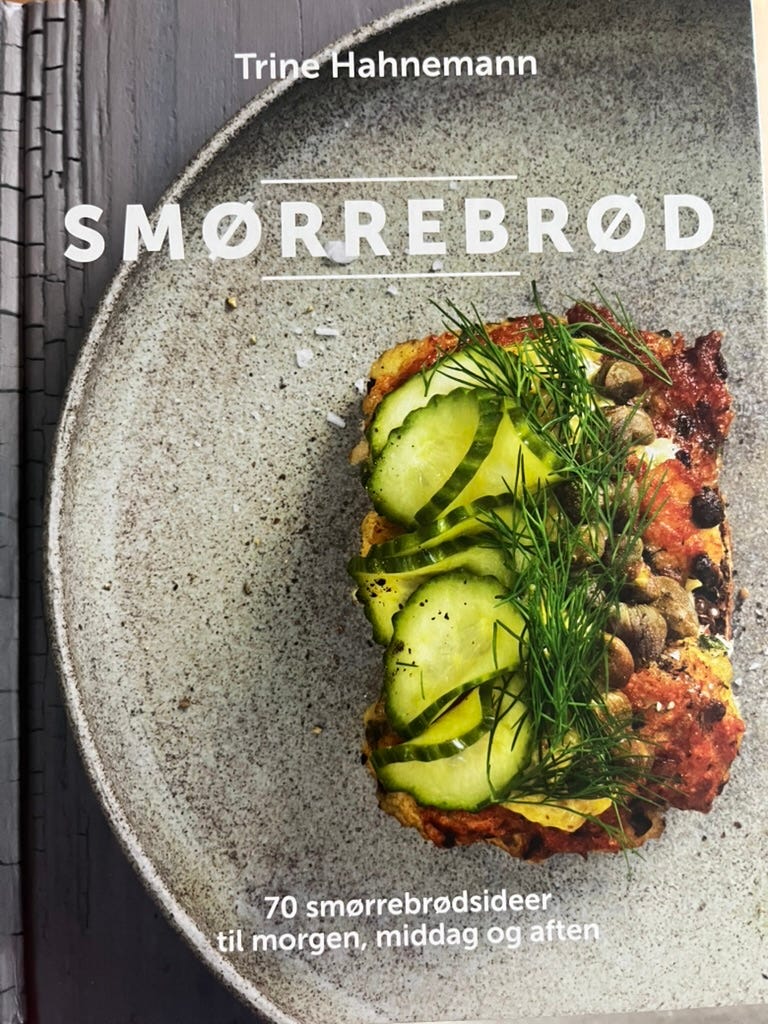
The secret to good smørrebrød seems to be the bread. The dense rye bread gives it a lot of flavor and structural stability.
Public life
The most powerful reading for me was Life Between Buildings by Jan Gehl, an architect and urbanist from Copenhagen. He categorizes outdoor activities in cities into 3 types:
Necessary activities are when someone needs to go out. You could be going to work or school, getting groceries, and so on.
Optional activities are something that someone does for enjoyment. This could be a walk outside, sitting on a park bench, or even just a detour on the way somewhere.
Social activities are something you do with family, friends, and neighbors. This could be something planned like an outdoor party, or meeting someone on the street and talking. It could be kids playing together.
Necessary activities are going to happen no matter what, but optional and social activities require good conditions—nice outdoor spaces to stay or walk in, as well as good weather. Optional activities give you more opportunities to get to know others, and that leads to more social activities.
This is what I had in mind as I saw all the public spaces in Copenhagen and Malmö6.
Our hotel window in Malmö faced Gustav Adolfs torg, a square with a permanent convenience store and temporary shops that would set up every day—think a tiny farmers market—and a car-free street that connects that square to another square a few blocks away. To be clear, this is one of the most touristy areas in the city, but there were a lot of locals as well, enjoying spaces made for people, not cars.
One huge positive for someone with young kids is that these are spaces where you can let your kids roam free, without worrying about them stepping into car traffic. Sure, you want them to be aware so they don’t get hit by bikes, but you don’t worry for their lives the way you would on most streets in the US.
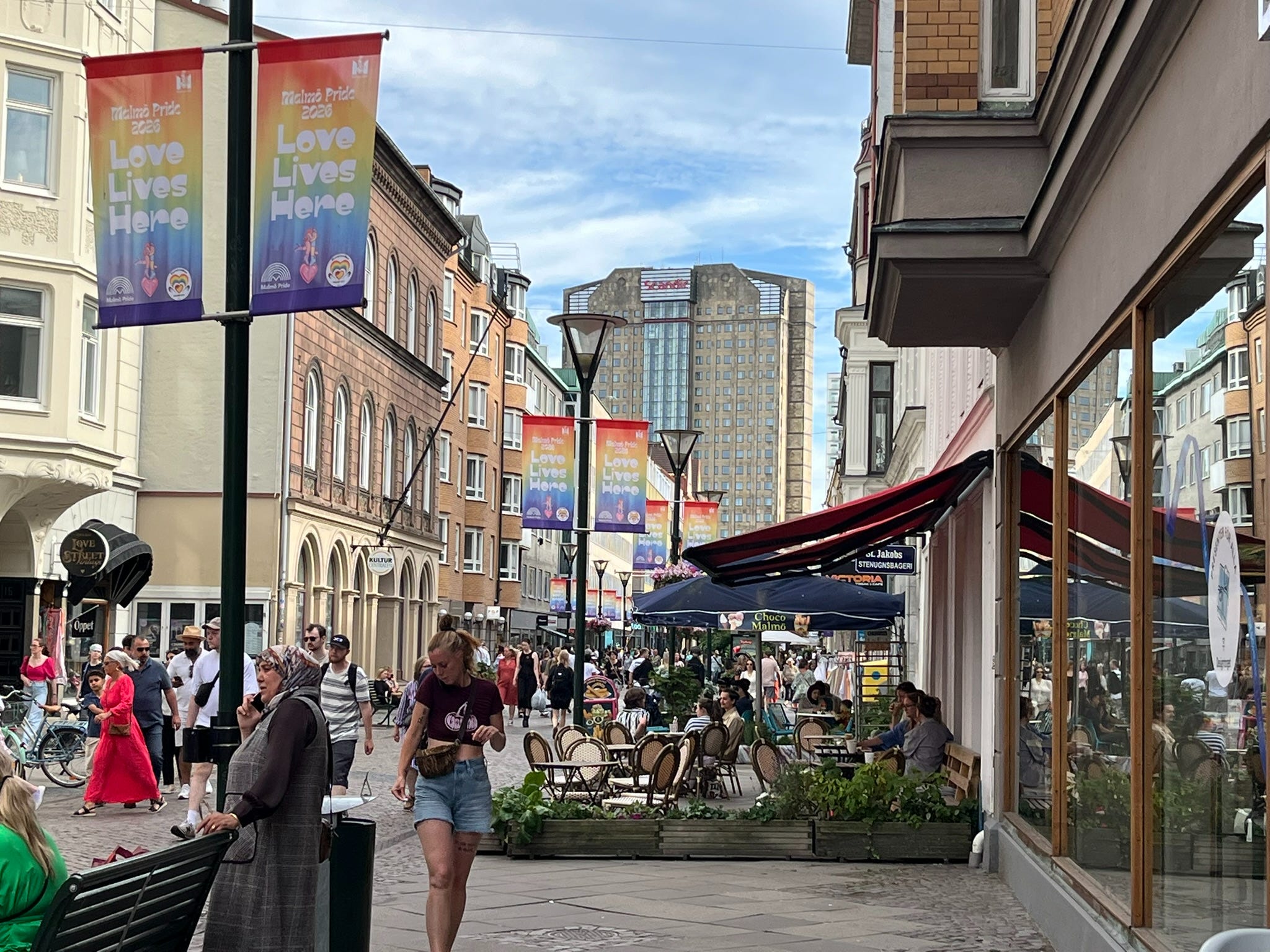
Food establishments almost always have outdoor seating on pedestrian streets. It’s so obviously a great way to enjoy good weather, and we should have many more of these in the US7. Here’s Jan Gehl, on what car noise does to people trying to have a conversation:
When background noise exceeds approximately 60 decibels, which is usually the case in streets with mixed traffic, it is nearly impossible to have ordinary conversations. It is therefore relatively rare to see people in conversation on busy streets, and where conversations do take place, they do so with great difficulty.
Knowing that these were some of the most bike-friendly cities in the world, I had researched bike rental places beforehand, but I wasn’t sure if an opportunity would present itself.
Now, our 1-year-old still naps after lunch, while our 4-year-old usually doesn’t nap, even though he sometimes should8. On this trip, what usually happened was that Julie would stay at the hotel during nap time, and I would go out with the 4-year-old.
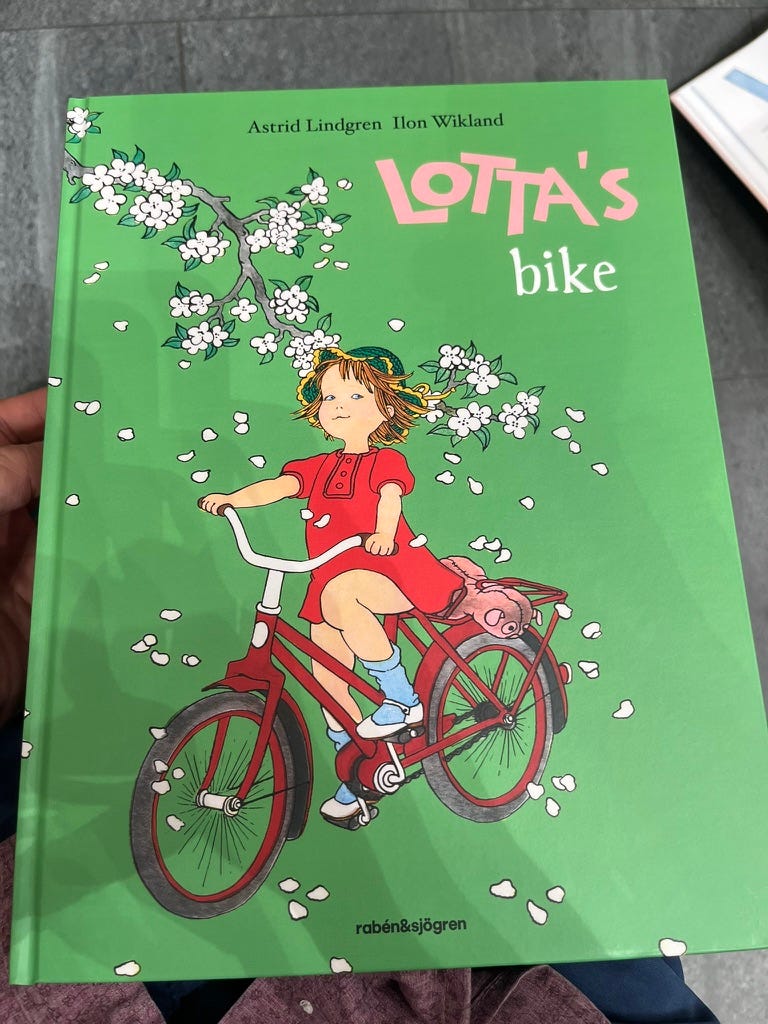
During the first nap-time outing in Malmö, my son and I ended up at the central station, where I knew I could rent bikes. So I suggested to him the possibility of renting a cargo bike, and he said yes. I went ahead and rented one for 2 days.
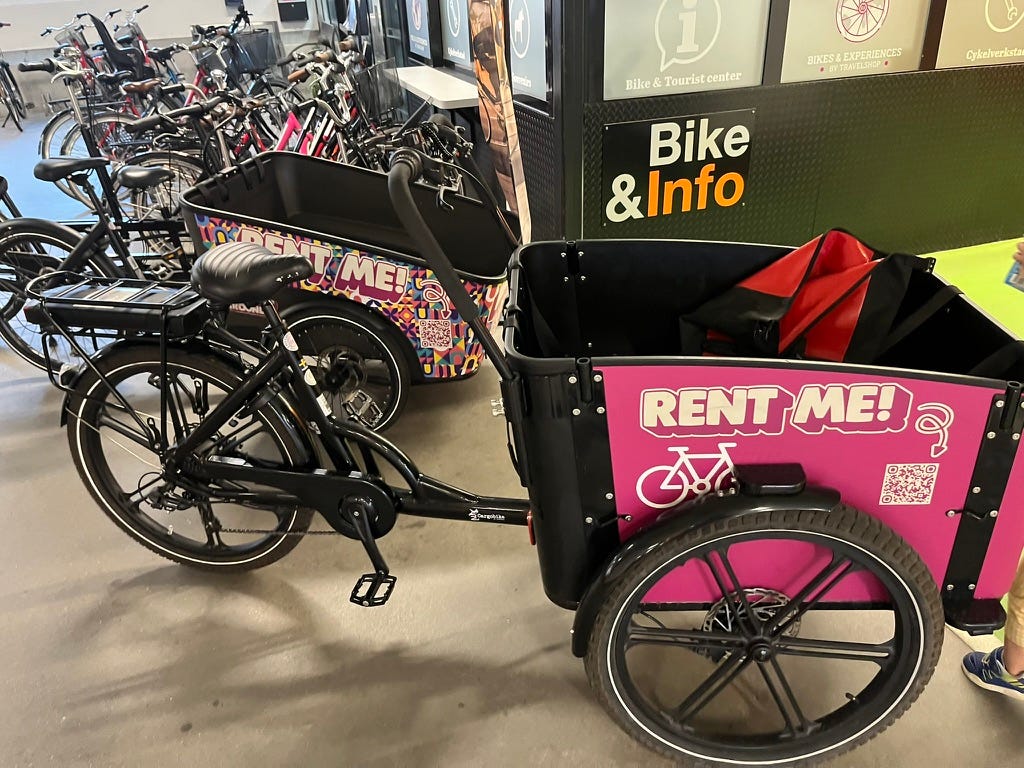
I’d been contemplating getting an electric cargo bike for a bit, so that I can take both kids around rather than just one in the back of my commuter bike. This was a great trial for me and the 4-year-old, to see what it would be like if we got one—in the friendliest of environments. Bike lanes are usually well-separated from car traffic, and you could ride slow in car-free streets.
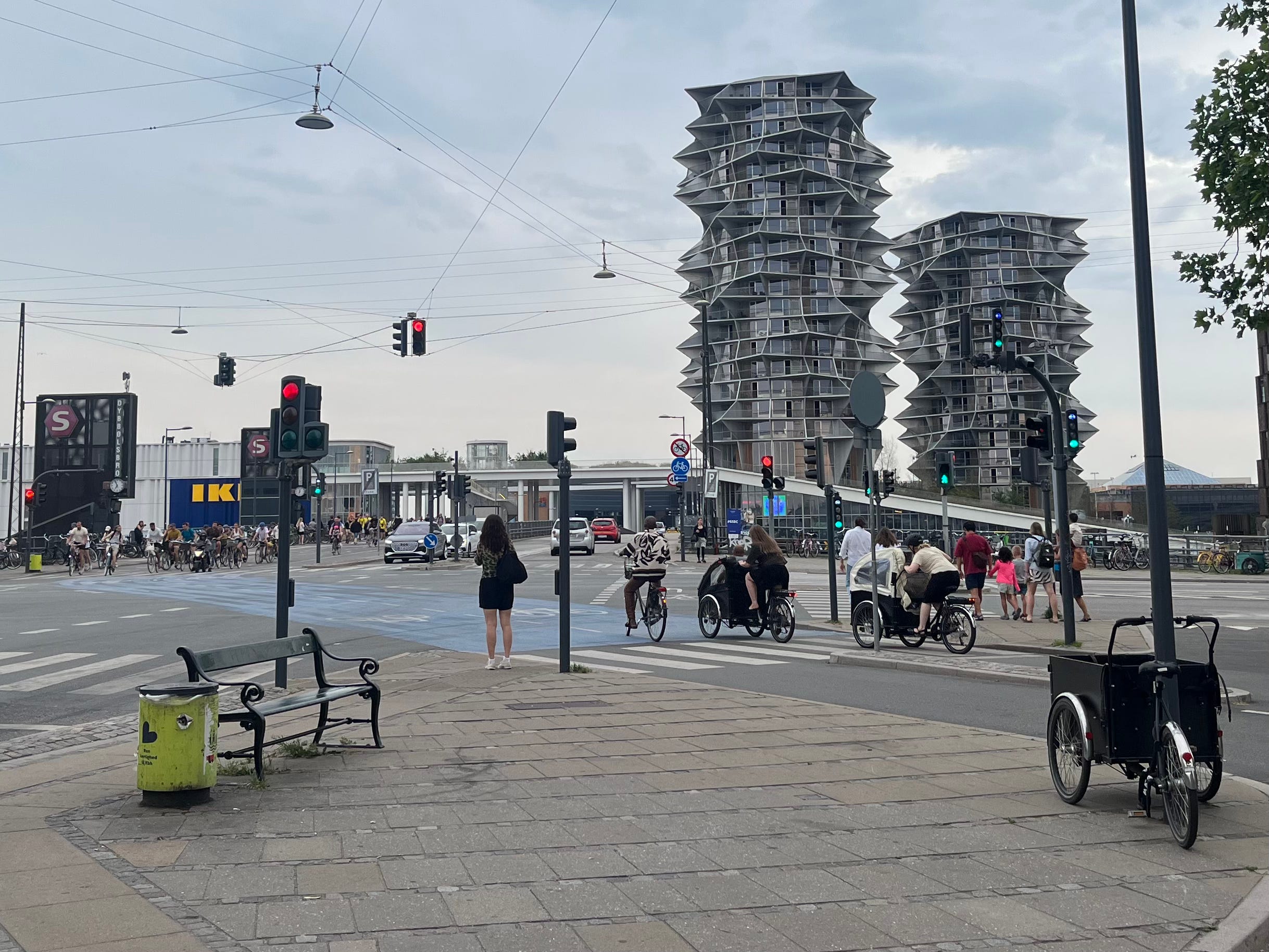
And maybe more importantly, getting around on a cargo bike is not seen as an oddity. Preschool teachers had their kids on cargo bikes for their outing. We saw teenagers and grownups riding in the buckets, and some of them looked like they were on dates—my take here is that driving your date on a cargo bike is more romantic than driving them in a car. I definitely recommend trying this out if you find yourself in these cities9.
My least planned activity
As I hinted last time, I’m a soccer fan who’s not a big fan of the World Cup. And I was hoping Sweden would go out early so that the trip wouldn’t be affected. Well, I’m still not a fan of the World Cup, but I did go to the watch party for the round of 32 game between Sweden and France. This was a last minute decision, as I only found out where the watch party was, 30 minutes before the kickoff at 11pm.
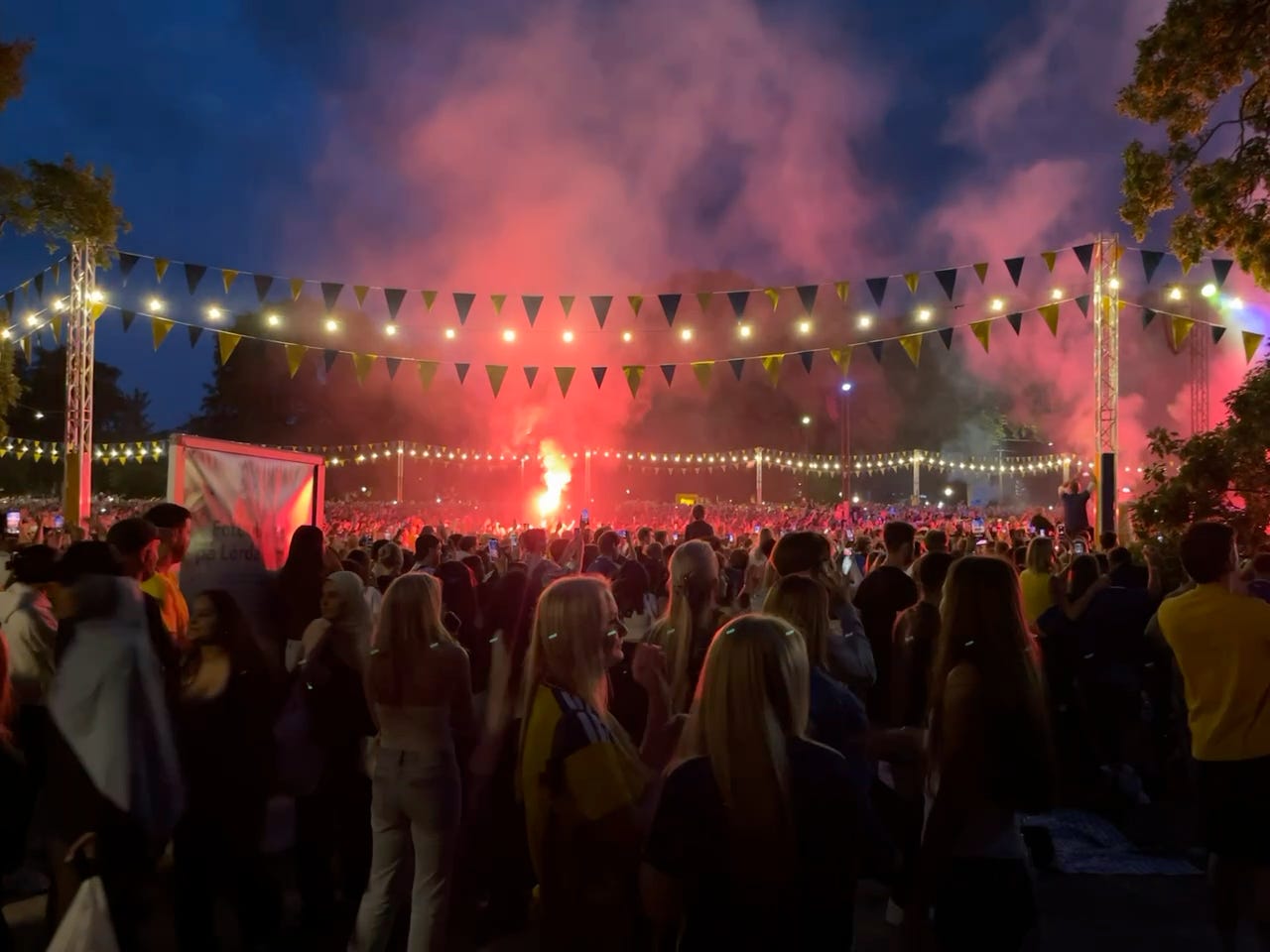
I could tell just a few minutes after leaving the hotel where this was happening, because there was an obvious flow of people to the castle park, mentioned earlier. And close to the site, which was an open field with a big screen, it was basically a night festival.
I started seeing the screen right as they were playing the French national anthem, then I heard thousands of Swedes sing their national anthem. This alone was worth the 10-minute walk in the middle of the night.
I was obviously too late to grab any seats, so I tried to find a good spot to see the screen. For the first 20 minutes of the game, I ended up standing next to a French guy, who was bantering with some Swedes in English. This was both entertaining and educational—among other things, I learned that the word for “goal” is mål in Swedish.
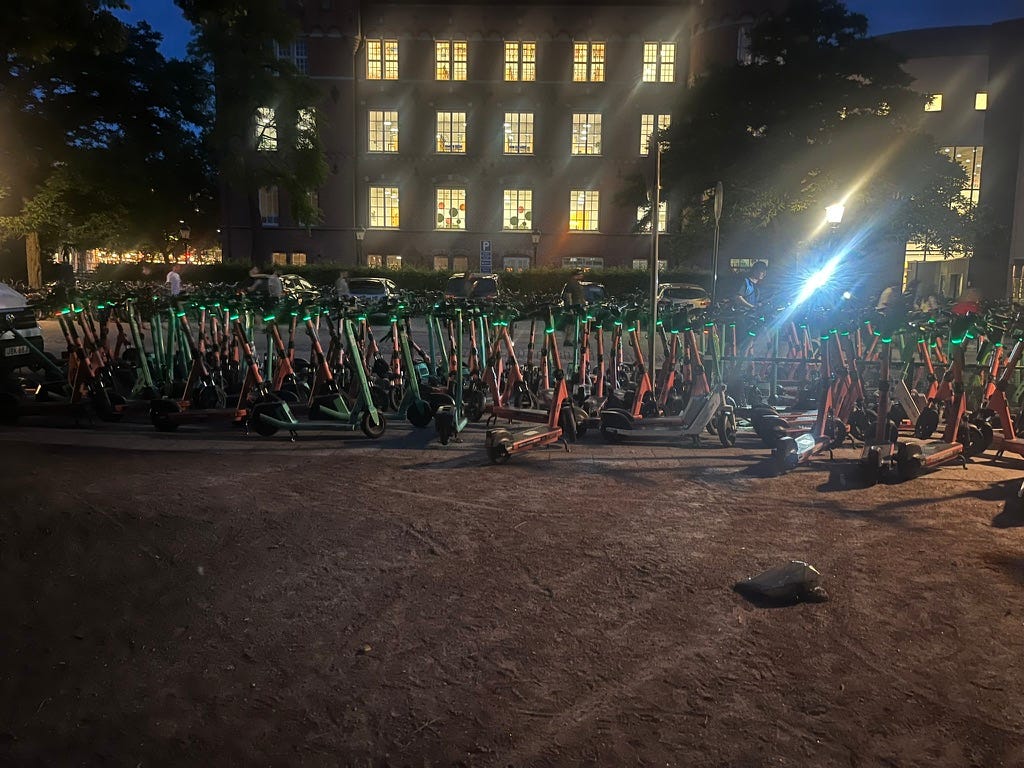
Knowing that France was heavily favored to win this game, I went back to the hotel at halftime, with France up 1-010. I’m glad I got an extra hour of sleep, but maybe I missed out on an epic group scooter ride out of the venue.
What I’m listening to now
Here’s something that was most tragic about the smoky air cancelling the Millennium Park concert, for me. That outdoor concert was a big reason I didn’t try to go see Pearl & The Oysters, who were playing in Chicago that night. Their new album Monkey Mind is great, and it’s becoming more and more obvious that they’re my favorite (active) musicians that I haven’t seen live.
I highlighted them before, and said they are “like The Beach Boys if they grew up playing Nintendo”, which I still stand by. “Wide Awake” is the standout track, and I love how they bracket the whole album with an intro to that song, called “Sound Asleep”. I have played this album to wake up the kids in the morning.
“A Pocket Symphony” is the most obvious tribute to Brian Wilson, who died last year. Not much happens if you’re just listening to the melody, because all the action is in the orchestration—it’s like Ravel’s Boléro, but pocket-sized. It’s also a song about the passage of time.
It brought me back to my time in Seattle, but even Seattle is actually south of Munich and Paris, and much further south than Copenhagen and Malmö. In the US, you’d have to go to southern Alaska to get that far north.
If you’re going to Scandinavia, Anders Husa and Kaitlin Orr seem to know what they’re talking about.
Literally, “The Little Coffee Roaster”
The cafe is called Mormors Café, which means Grandma’s Cafe. Terms for grandparents are some of my favorite things about the Swedish language. Observe:
mor — mother
far — father
mormor — mother’s mother
morfar — mother’s father
farmor — father’s mother
farfar — father’s father
So logical, and oh so childlike.
I’m sure I can decipher more of the book if I cook out of it, and the phone can translate pretty well in a pinch.
A lot of this applies to old cities in Europe.
You do have to be careful, though, to not think that what you see in touristy areas generalizes to what the average citizen experiences. A lot of people live in the suburbs, and their experiences are hard to gauge just from a short visit.
This is where I want to note my lingering question after reading the book.
Aesthetically, I want to live in a “Gehlian” city, where many streets are walkable and public spaces are full of people. The popularity of these places suggests to me that most people have this preference as well. But Gehl wasn’t a social scientist—he wanted to know how people used spaces that were designed by architects like him. So it’s not clear to me how much these public spaces improve people’s lives. Are they just nice-to-have’s, or should we be fighting for them really hard?
I love naps, by the way. I have been failing to communicate to him this important life skill and source of joy.
We also generally enjoyed the public transportation on this trip—this is a footnote because the post is already very long. Some highlights:
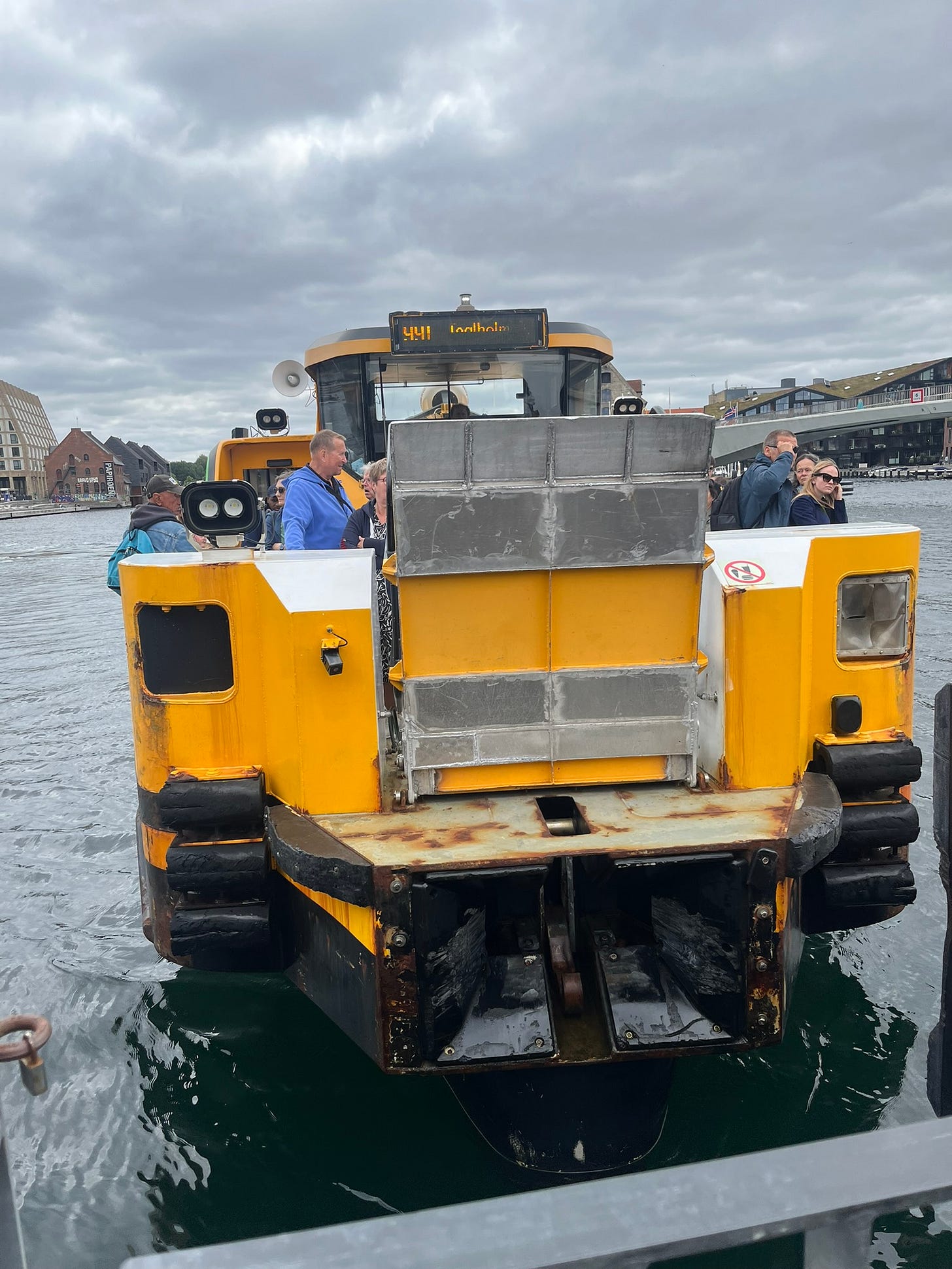
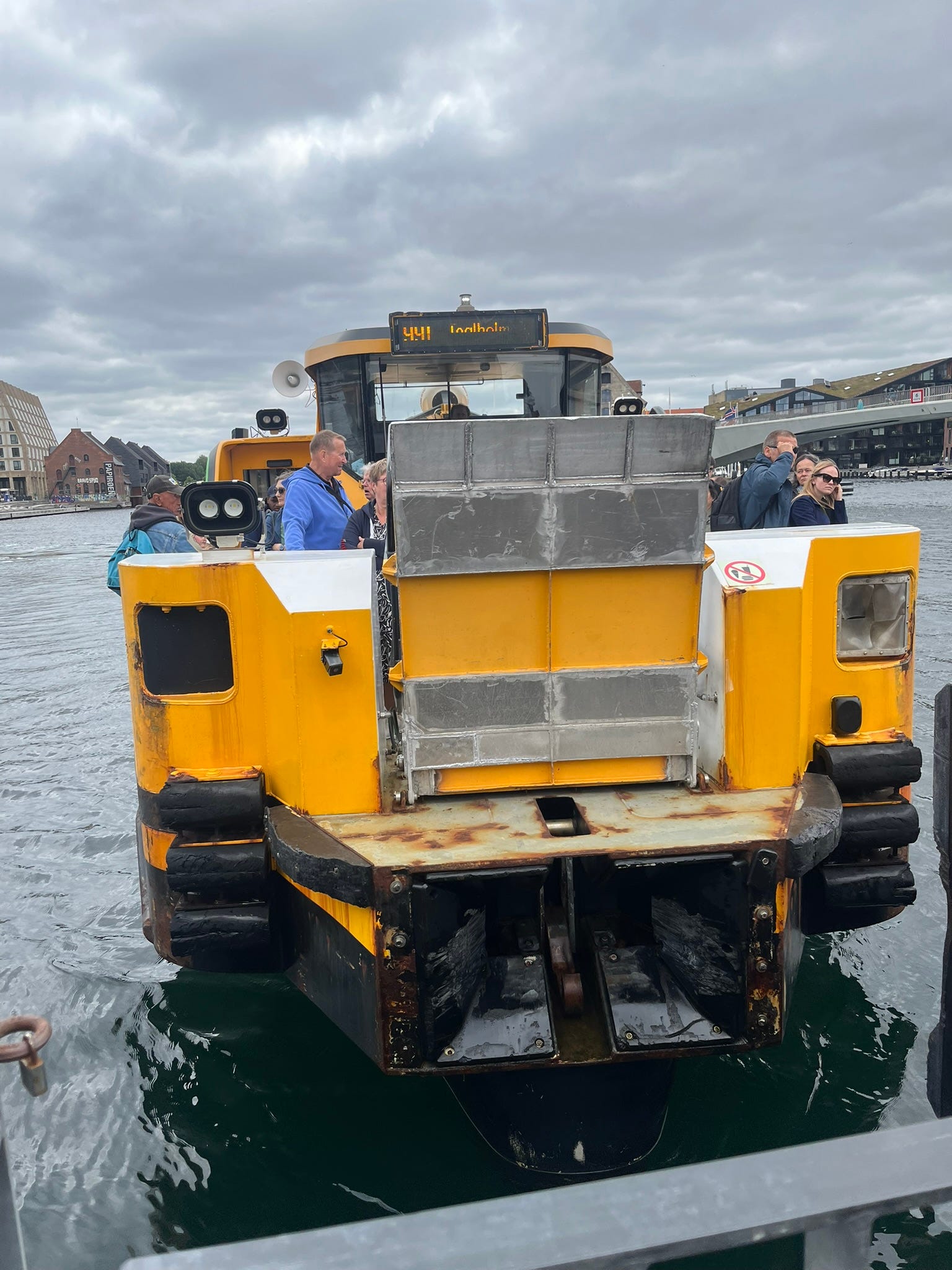
“Harbour buses” are boats that are part of Copenhagen’s public transportation system, and you can ride it on the same ticket as trains and buses. We rode the route 991 (reverse route is 992) from Nyhavn to Bryggebroen.
Copenhagen Harbour Bus S-train (S-tog) is the commuter rail system in Copenhagen. The beauty of this system is that it was created by connecting 2 downtown terminals with a tunnel, so that 1) there’s fast service from one suburb to another suburb in a different direction, and 2) service near downtown is extremely frequent.
We stayed near Dybbølsbro station, next to the central station, and we never had to wait more than 2 minutes for the train to the central station. Here’s a good introduction to this idea called through running. Star:Line Chicago has been advocating for this in Chicago, which has 4 downtown terminals.Copenhagen’s subway system is entirely driverless. Aside from the efficiency of this—if you can make it work—what’s cool about this is that if you sit at the front of the train, you get to see the train going through the tunnel with nothing obstructing your view.
France did win the game, 3-0.
Sweden just was not a very good team. They went 0 wins, 2 draws, and 4 losses in the group stage of the European qualification for the World Cup. They advanced to the playoff stage only because they had won their UEFA Nations League C group in 2024-25—I would compare this to winning a lottery.