Memories of Charleston
Layers of a great food city

Short updates:
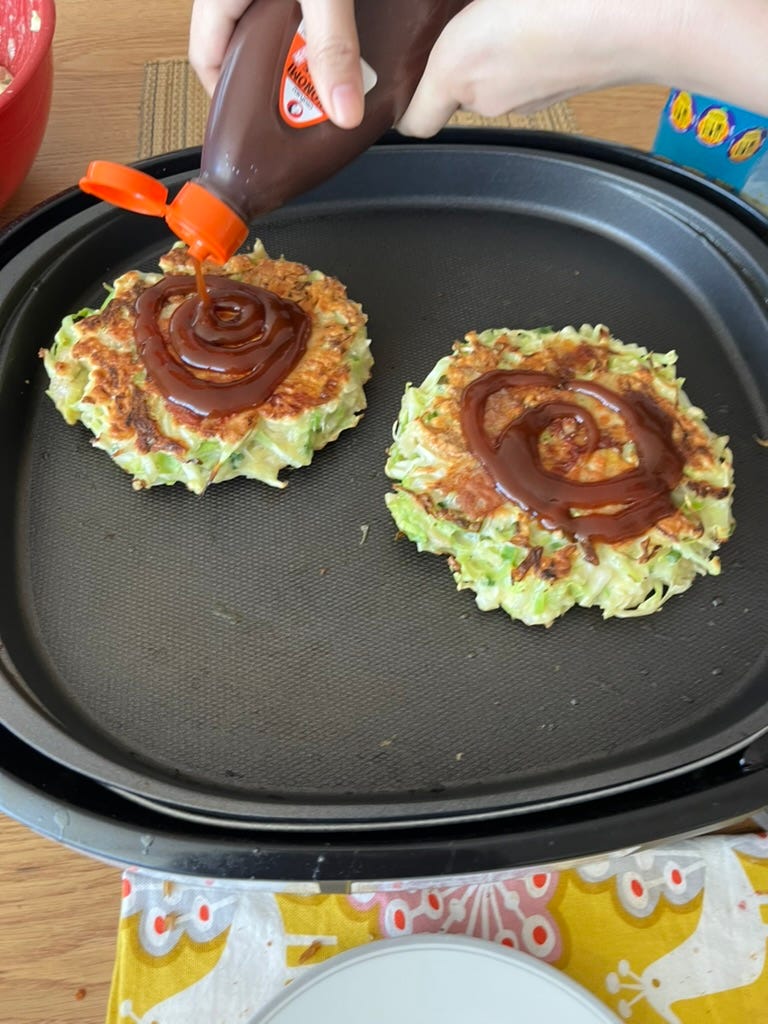
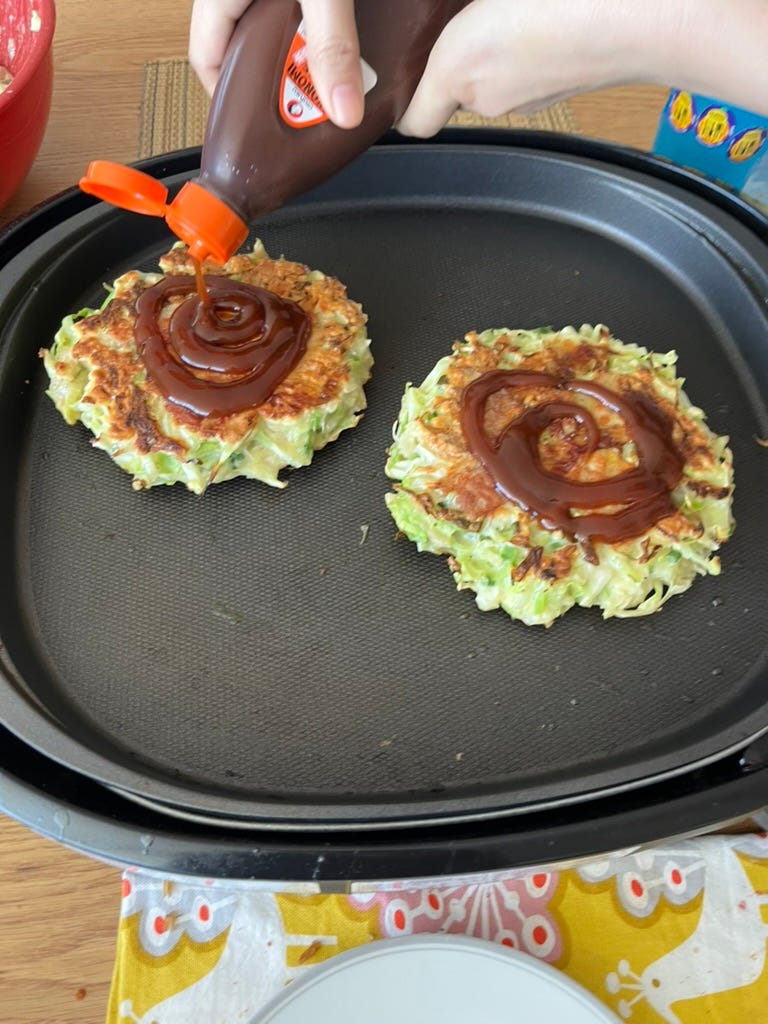
How griddle cooking is going: I’ve now made okonomiyaki a couple of times, and it’s good.
It’s also very fun to make tacos by cooking vegetables and marinated meats, then warming the tortillas on this thing.
These days, my main sports allegiance is with Arsenal FC, and we just won our first English Premier League title in 22 years. I first started watching regularly in the 2002-03 season, so I got to see the last title (the Invincibles) very early, and it’s been a long wait since then. After 3 straight years of 2nd place finishes, and almost getting caught again this year1, I feel more relief than joy to be honest.
But I’ll enjoy the Champions League final this Saturday, whatever happens.A lot of the outdoor concert schedule for Millennium Park is out for the summer. The Blues Festival is coming up soon, with Taj Mahal playing on 6/7.
In the summer music series, Marcos Valle and Daniel Villarreal on 7/16 are the highlight for me. I talked about Villarreal here.
Here’s a map of all the locations I talk about in this post.
I was on a work trip to Charleston last week. Some of you know that just before Chicago, I lived in Columbia, South Carolina. Charleston is less than 2 hours away by car, and I spent many weekends there, usually when Julie was visiting2.
My favorite sandwich anywhere is 167 Raw’s scallop po’ boy.
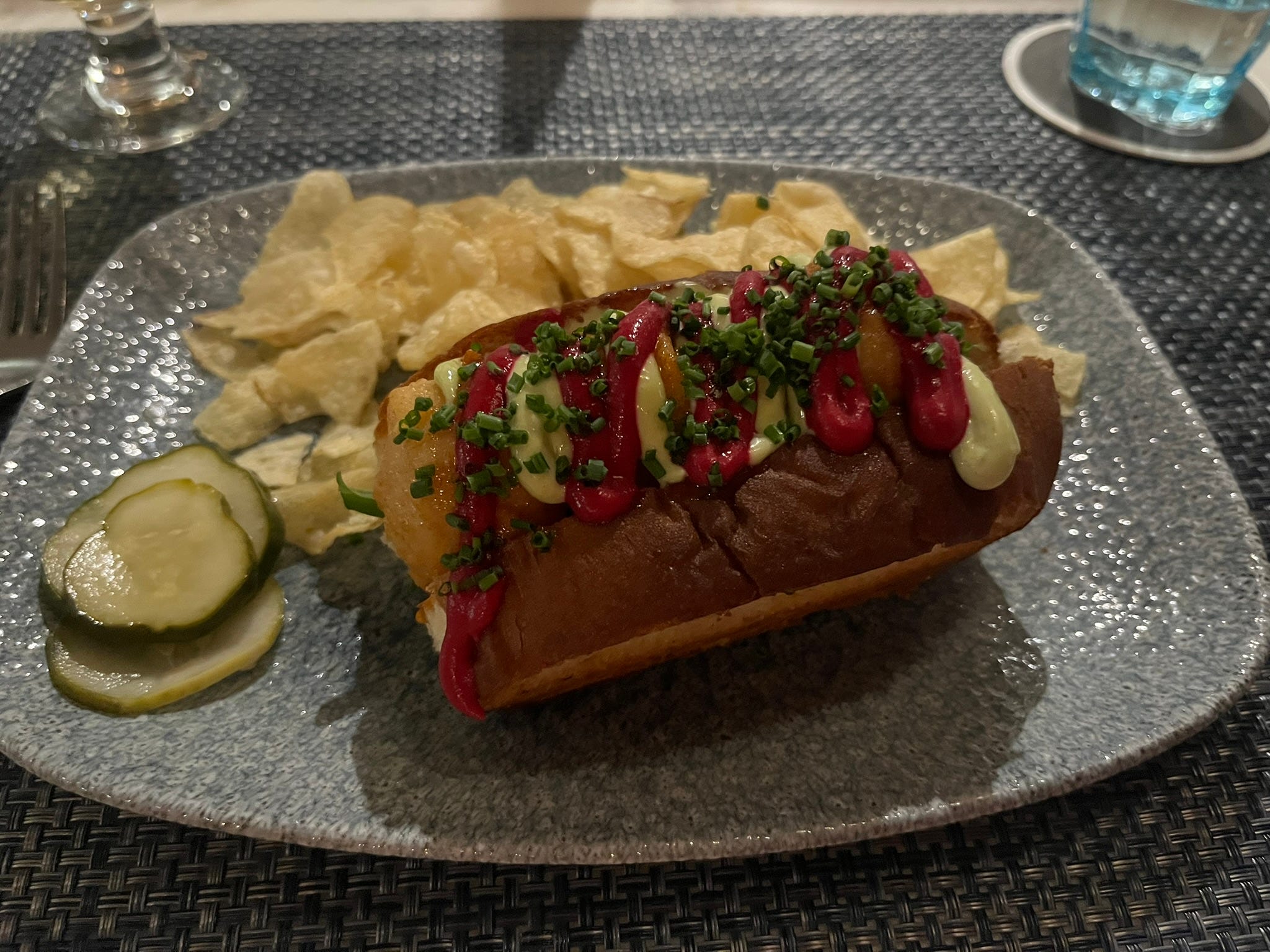
The last time I was there, though, was in 2017. And they’d moved from Bay Street to King Street, right in the heart of Charleston tourism. But the po’ boy was as great as I remembered, with velvety scallops seasoned with just-a-bit-sweet beet sauce.
While eating this, I dropped half a scallop on the floor, and well, I didn’t come close to picking it up and eating it, but I came closer than I’d like to admit.
Their new space is a lot bigger than the previous location, which is now 167 Sushi. I remember there were maybe 4 seats that looked into the small kitchen, and I was there once by myself, and overheard the chef responding to another diner who asked why their food tasted so good. He said
We get good products and try not to mess with them too much.
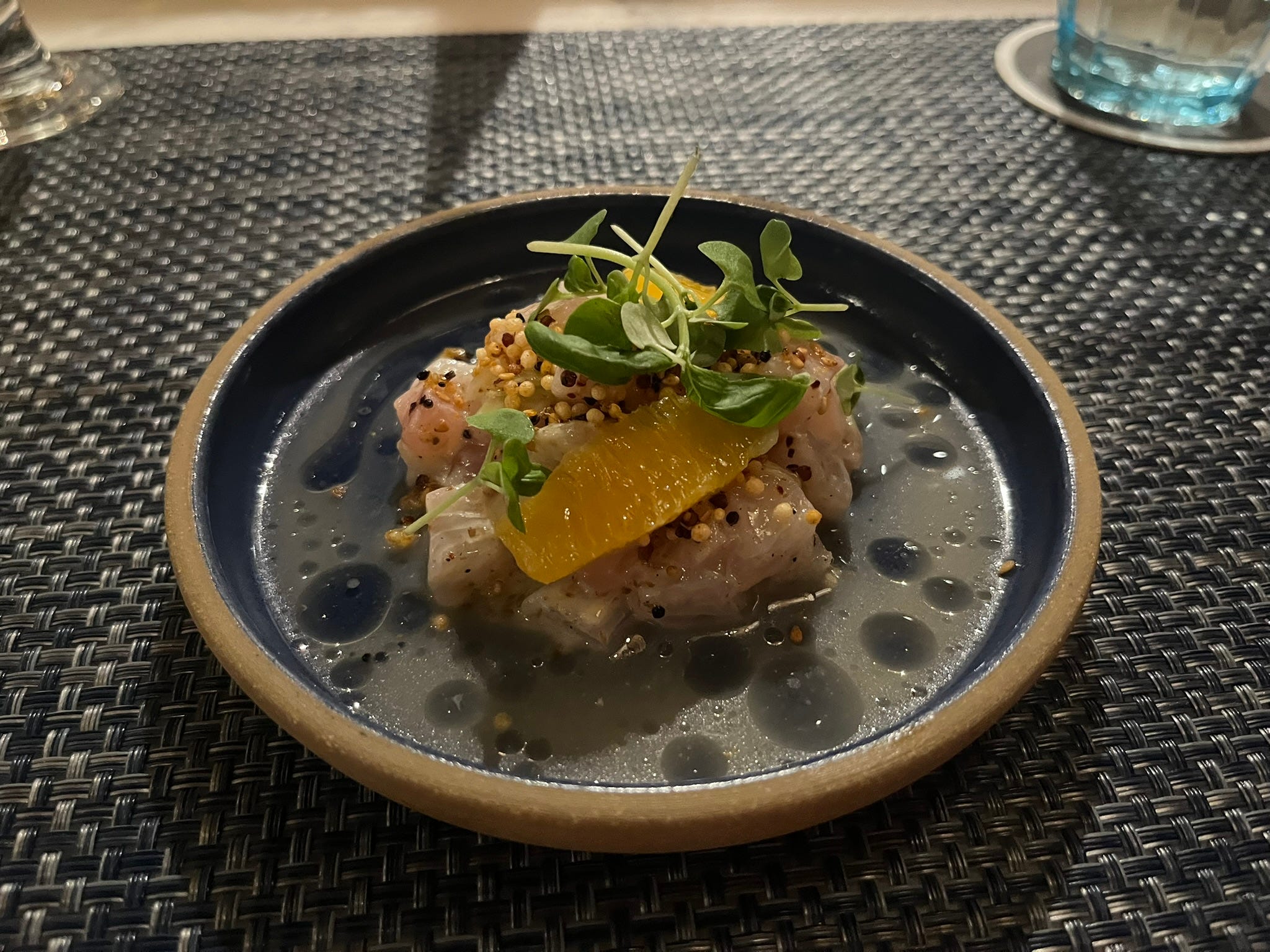
This is basically one ideal for restaurants in my mind3. It’s also what I remembered when I got their hiramasa crudo.
Peeling and eating
It’s entirely possible to spend a nice few days in Charleston, going to fancy restaurants, seeing pretty old houses from the outside, and not ask too many questions. Once you do start asking questions, it becomes obvious that there’s Black culture and history everywhere, often hiding in plain sight. It may be the hand-woven baskets at the Charleston City Market, the Old Slave Mart Museum, or just the knowledge that all these plantations nearby were places that flourished based on slave labor.
Before this trip, I read Denmark Vesey’s Garden, a book that I would recommend for anyone who likes Charleston and cares about history. This book’s thesis is that after the Civil War—which the South fought to preserve slavery, according to the actual people involved—the white elites in Charleston led a multi-generational effort to change how we view slavery and the Civil War. In the last few decades, many people in Charleston have been making an effort to reverse this, to represent Black history and the history of slavery more prominently and more honestly, but this is still a contested issue.
A group of us was walking by Marion Square, when a drunk, middle-aged white man was walking toward us, shouting and spitting at something. We couldn’t clearly make out what he said, but when we realized that he was spitting at a Robert E. Lee monument, we understood that he was saying “Fuck Bob E. Lee!”
It turns out that the monument had just been moved this year to the square, one of the most prominent locations in the city. This is also where the infamous John C. Calhoun monument stood until it was removed in 2020.
One chapter in the book talks about how in the early 20th century, a group called the Society for the Preservation of Spirituals (SPS), made up of plantation owners and their descendants, were performing spirituals that they remembered hearing from their slaves, and how that was the introduction to spirituals that many white people had. SPS presented spirituals only as devotional Christian songs in a particular style—which they are—and downplayed how the lyrics were often about hardships under slavery and yearning for freedom and justice.
Most of the spirituals that SPS sang come from the Gullah Geechee people, who were descendants of slaves brought in to work on plantations near the coast of South Carolina and nearby states, and were originally from West and Central Africa.
I did want to make sure I got a Gullah Geechee meal on this trip, and had my eyes on Bertha’s Kitchen. I got a rideshare from the airport, with two coworkers, got to Bertha’s and found that it was closed for the day.
Have I mentioned that the folks at American Weekender are great at giving you recommendations for your trips? I had gone through their Charleston recs, so after a quick check to make sure they were open, I was able to change the destination to Hannibal’s Kitchen.
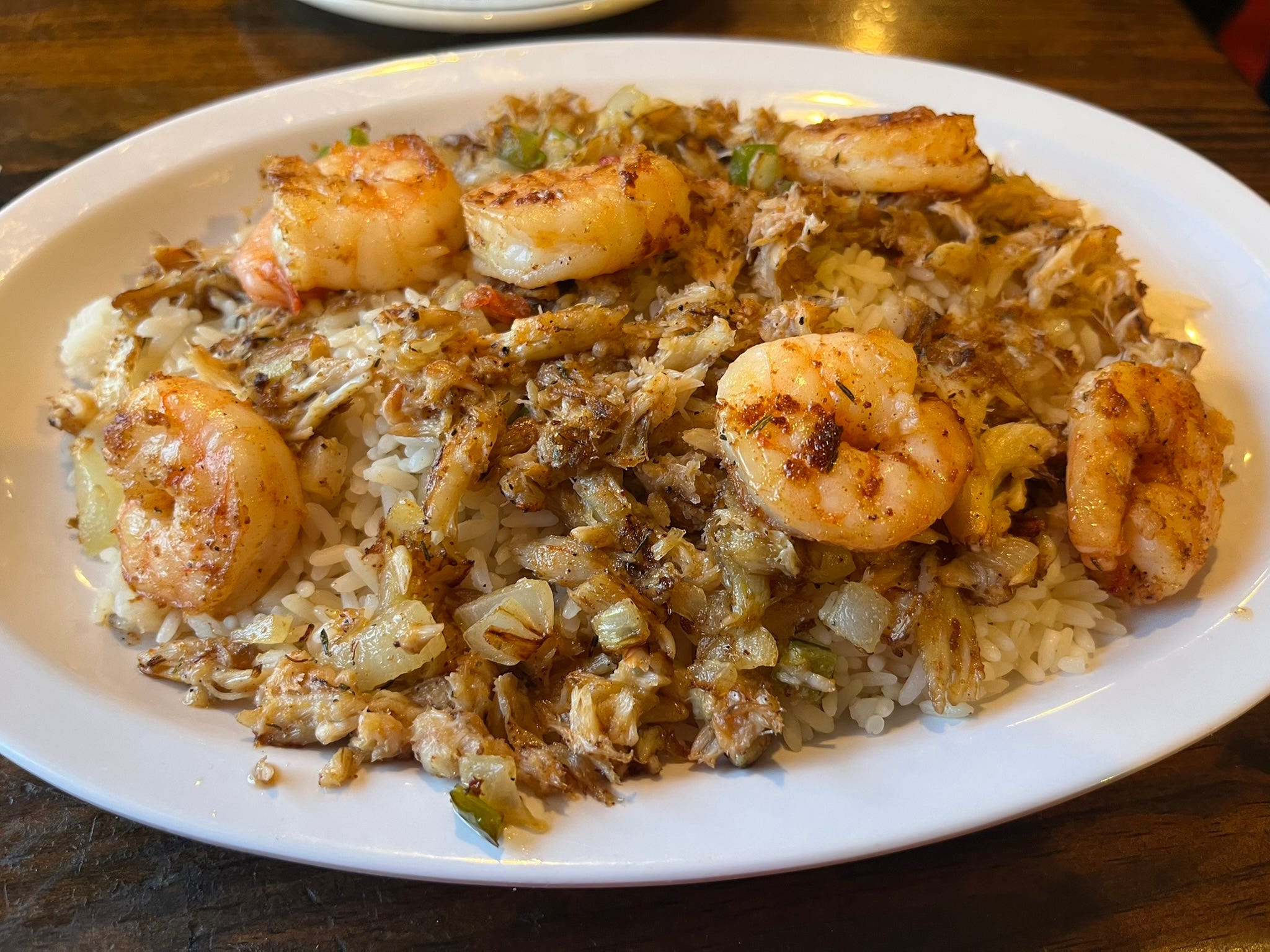
The highlighted menu item was crab rice, and I added the optional shrimp. This was a satisfying umami-packed dish, with a very generous amount of crab. If you’ve had jollof rice from West Africa, you would recognize the same outline of a one-pot rice dish. You can actually ask them to substitute red rice for white rice, and that might highlight the African-ness of this even more.
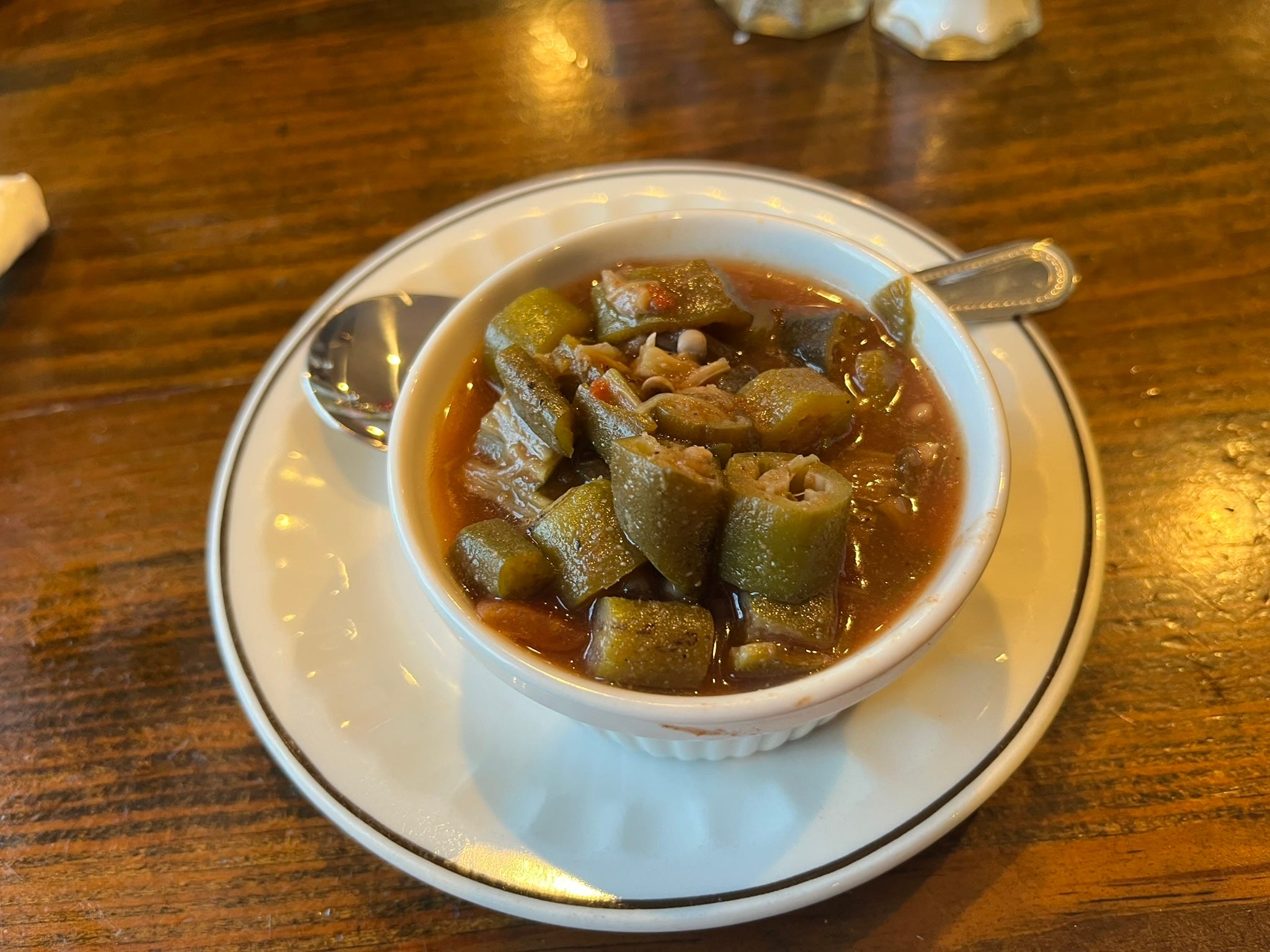
I got a side of okra soup. Okra is an ingredient that traveled from Africa to North America, and the soup is a cousin of gumbo. It’s tomato-based rather than roux-based, and not as aggressively seasoned.
On this trip, I was also able to make it to the International African American Museum, which only opened in 2023.
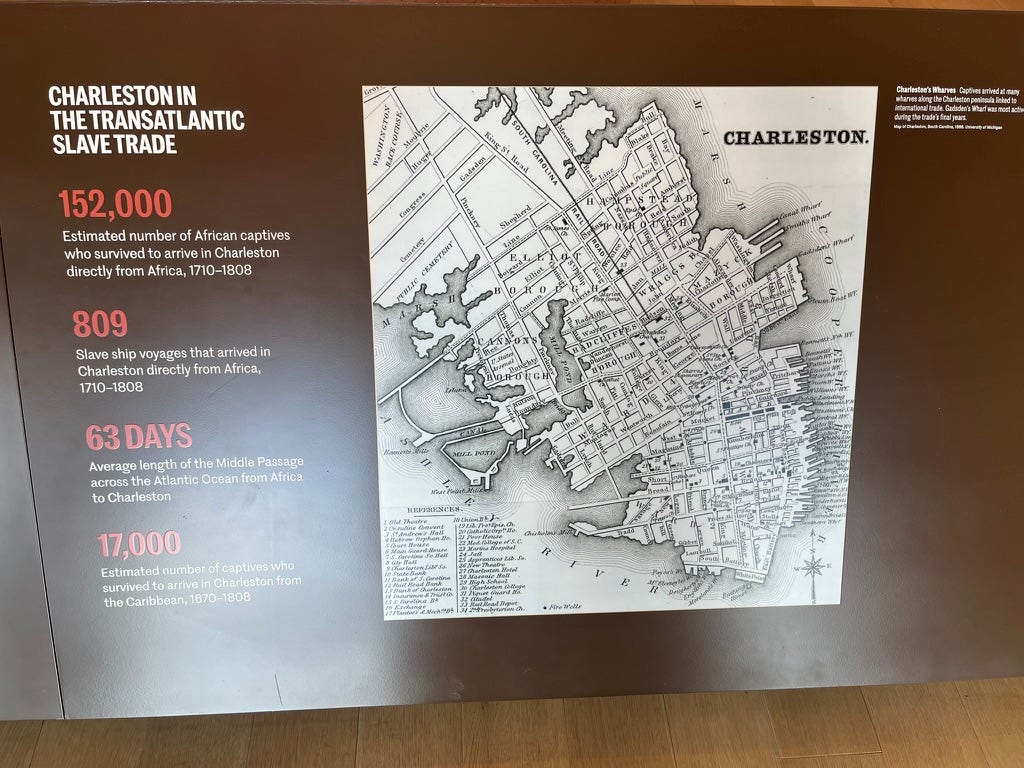
The museum is on Gadsden’s Wharf, the wide rectangle jutting out on the east side of the Charleston peninsula in the map4. This was where a large number of enslaved Africans came into North America.
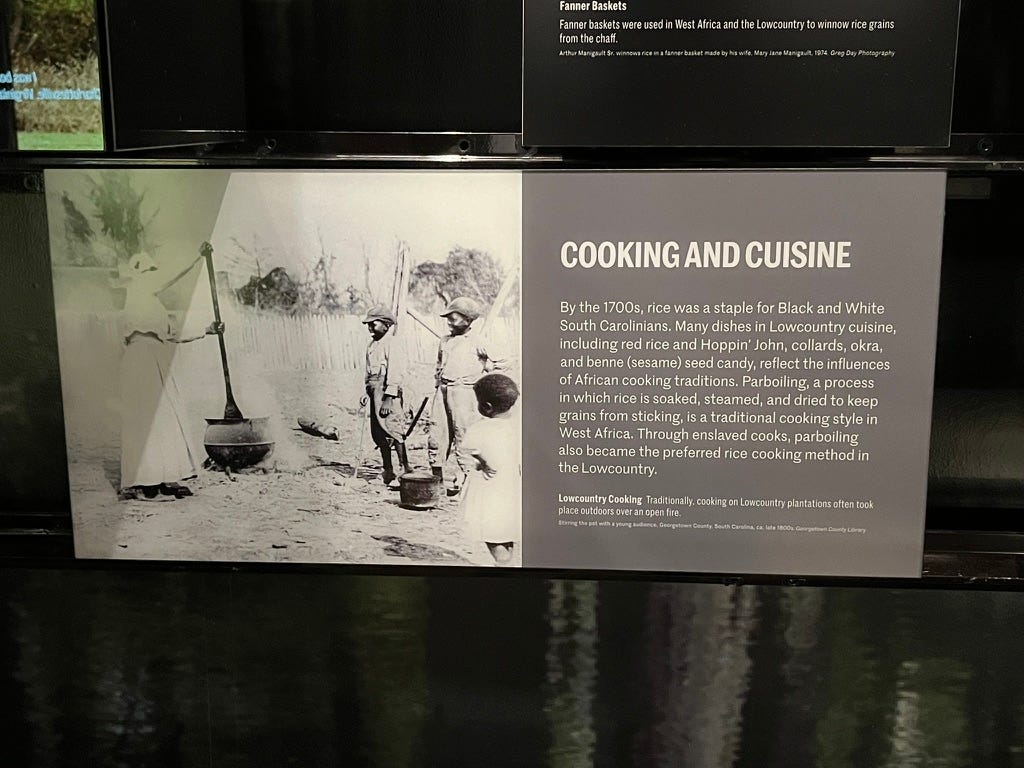
There’s a fair bit of material specific to the region, including whole exhibits on rice farming and the Gullah Geechee culture. This is not a huge museum like the African American history museum in DC, but I would recommend it to anyone who likes Charleston, because so much of what makes the area unique ultimately traces back to Black history.
but also, everything just tastes good
With a lot of the best food in Charleston, the backbone comes from that African influence and abundant local seafood, and there’s a layer of different techniques on top of it. That used to be almost always European techniques, but there seems to be a lot more Asian fusion now, and even an African restaurant.
When the work part of the trip was over, there was a group of coworkers willing to try walking into Chubby Fish, so I joined them. We got there well before 6pm, but the wait was going to be 3 hours. The hostess was insistent that we really should take the slot, which tells you how popular they are. But she also suggested we try The Ordinary, a bigger restaurant nearby.
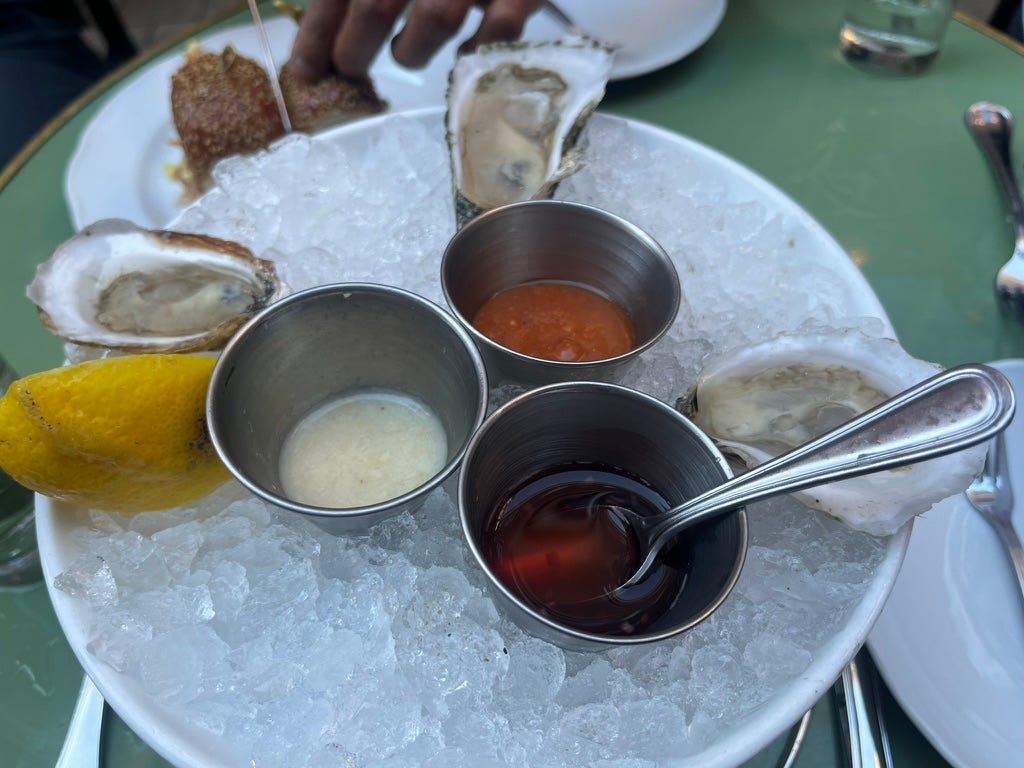
And again, American Weekender prepared me well, and I got their excellent oysters. There were 3 kinds, all from South Carolina, and one of them was a wild oyster, which I’m not sure I’ve had before.
On the final morning, I wanted to get shrimp and grits, a classic Lowcountry dish, and also a classic “we get good products and try not to mess with them too much“ dish at its best—supposedly it started as fishermen’s breakfast.
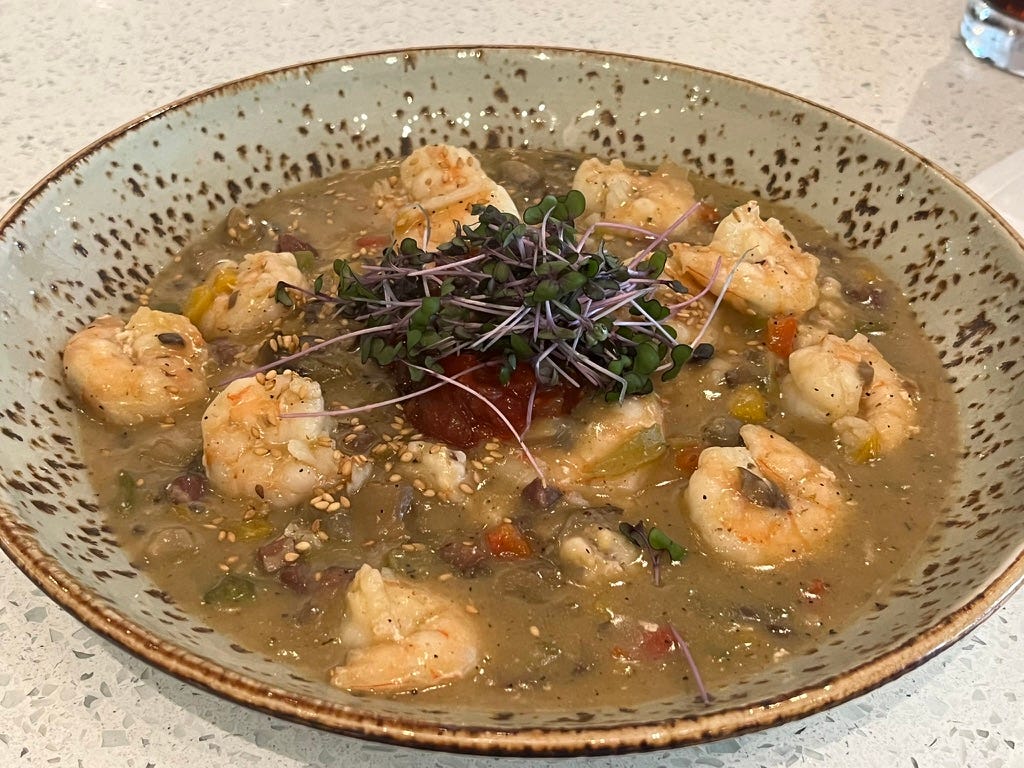
The version at Millers All Day was very good. At first, it was exactly how I expected it to taste, then I found the tomato jam in the middle of the dish, not mentioned on the menu and under the sprouts. The sweet and sour condiment gave me a great contrast with the rich, creamy grits.
My final meal was at King BBQ in North Charleston5, on the way to the airport. This is a counter-order Chinese-Southern BBQ place.
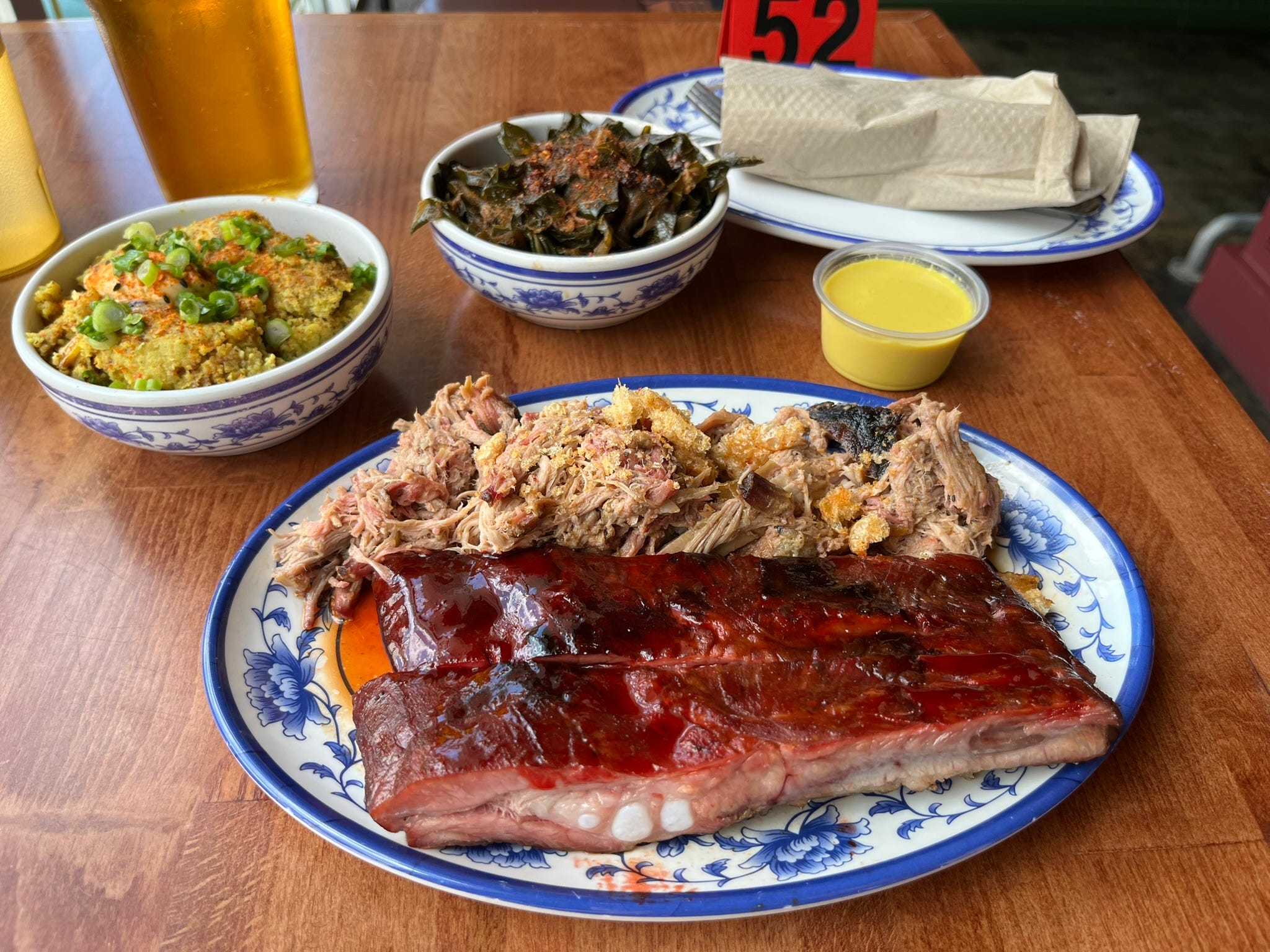
I got the pork combo, which comes with smoked spare ribs with Hong Kong-style BBQ glaze and chopped pork—a Carolina BBQ staple. I went with the cashier’s favorite sides, Sichuan collards and Hong Kong curry corn pudding.
Sichuan collards gave me a sense of “of course this works”—both Sichuan and Southern cuisines cook down unsung greens with fat and spice to make it great. And the curry corn pudding, I could keep eating forever if it weren’t so filling. The chopped pork was the least interesting, but still good BBQ. And the short ribs really delivered on the promise: this was great Southern BBQ ribs with an unusual and yet tried-and-true BBQ sauce.
What I’m listening to now
Singing by Gia Margaret is my favorite Chicago album so far this year.
I love that she’s called her own music “sleep rock”. Most of the tracks have very mellow vibes. But unlike her last album Romantic Piano6, which was almost all instrumental, this one has a lot more singing.
And I do enjoy the least sleepy track on this album, “Good Friend”.
Also, the title was decided by a game that I wasn’t able to watch because it happened during the working part of the Charleston trip.
Columbia is the only place where I gave up trying to use public transportation as my primary mode of transport and bought…a bicycle. So I didn’t own a car there—I never have—but I would rent one whenever my family or Julie was visiting.
In Chicago, this quote makes me think of Monteverde, Daisies, and Dear Margaret, to give some examples.
The map is really nice for illustrating that the eastern side of the peninsula, facing the deeper Cooper River, has always been where the heavy-duty port functions were. The western side, facing the Ashley River, was, and still is, much more of a marsh, and there’s been a lot of relatively recent land reclamation.
Trivia: the Ashley and the Cooper Rivers are both named after the same person, Anthony Ashley Cooper, Earl of Shaftesbury.
Another trivia, which I learned from Denmark Vesey’s Garden: There was a writer who wrote a column for the main Charleston newspaper with the pen name Ashley Cooper.
This was my replacement for Rodney Scott’s BBQ, which closed—hopefully temporarily—earlier this month. They opened right around the time I left the state, and I’d heard so much about it for years.
I’m sad that I didn’t get to try Rodney Scott, but improbably, I don’t know if it can top King BBQ in my mind.
I just now discovered that a song from this album, “Hinoki Wood”, is well-known on the internet.
I’m so glad to hear you had a great trip! You hit lots of our favorites - King BBQ is for sure a must on every visit now.